12 Facts About 1kg Of Coffee Beans To Make You Look Smart Around The Water Cooler
How Many Cups Does 1kg of Coffee Bean Produce? If you're a frequent coffee drinker or are responsible for your office's supply of beans, it's important to understand how many cups 1kg can produce. This will help you budget and ensure you have enough coffee for your needs. There are many factors that can affect the number of cups that a kilo bean can produce. Some of them are: Economical As one of the most sought-after beverages, coffee is not just a delicious beverage; it is also an excellent source of energy, and comes with numerous health benefits. Furthermore, it is available in a variety of forms such as instant, filter and roast, making it easy for anyone to drink. However, it is important to choose the best kind of coffee beans. The best choice is whole bean coffee, because it has a superior flavor and aroma, and can be used with various methods of brewing. Whole bean coffee is a fantastic alternative for those who are concerned about the environment. It is packaged with biodegradable and compostable material. Many coffee enthusiasts prefer to make their own cup at home. It's cheaper to make your own coffee at home rather than purchase pre-ground coffee or buy it in a café. However, many people do not realize that the quality of their home-brewed coffee is determined by the quality of the beans they are using. Choosing the right coffee beans will ensure that your brew tastes as good as possible and will keep you happy. 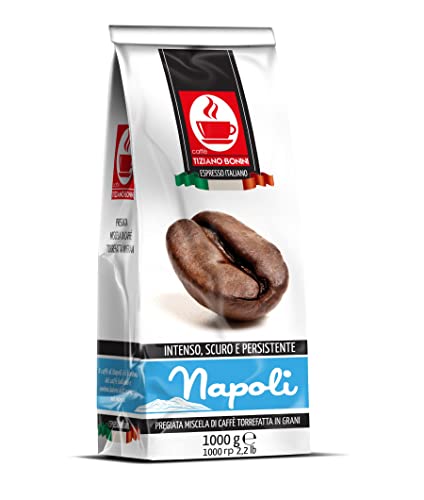 You can make approximately 140 cups of coffee using 1kg of beans. You'll save money while obtaining the most fresh coffee. Additionally, you'll be able to experiment with different grind sizes and brewing techniques. You can also try different coffee varieties to discover your favorite flavor profile. A kilogram of coffee beans could cost anywhere between $40-55, depending on the type and brand of beans. But, if you're a regular consumer of coffee buying a kilo of beans can save you up to 50% over buying smaller quantities. Coffee production has an impact on the environmental. In fact, it produces 1.02 kg of CO2eq per kg of green coffee (ISIC 2022). Furthermore, the process of harvesting and milling the beans requires considerable amounts of electricity and water. The process of decomposition, which is usually discarded in the form of pulp or cascara creates methane. There are several initiatives to reduce the negative impact. Environmentally friendly The best method to purchase coffee beans in bulk is to buy them in bulk. This allows you to save money while also avoiding waste. It is more beneficial for the environment to purchase in bulk, as it helps reduce packaging costs and transportation costs. Also buying in bulk could be more convenient for you. You can also buy fair trade coffee beans that are grown without chemical fertilizers or pesticides. The Fair Trade label guarantees that the producers receive a minimum price for their products. It also ensures no chemicals were used during the growing, cleaning and drying process, milling packaging, transportation and shipping inspection, warehousing or roasting. The majority of coffee farmers are women and children. According to the International Labor Organization, 150 million people are forced into working in the production of cocoa and coffee. It is essential to support brands that promote sustainable farming and prioritize transparency in their supply chains. Choose coffee that is shade-grown because this helps preserve biodiversity and soil health. Another method to be environmentally friendly is to avoid putting whole coffee beans in the refrigerator. They will absorb moisture from the other food items in your fridge. Moisture can ruin coffee beans and cause them to lose flavor. It is also essential to keep them in a cool, dark place away from direct sunlight. Lastly, if you are planning to store your coffee beans in the freezer, make certain that they are sealed. This is why a vacuum sealer would be the best choice. It will stop the beans from absorbing any water or gases. If you aren't able to afford the expense of a vacuum sealer then a food-grade plastic bag can be used. If you buy 1kg of coffee beans, it is important to consider how much you'll make use of them. You may use the coffee beans faster or more slowly based on your taste preferences and brewing method. If you use an espresso machine, you'll require more beans than someone who is using a filter machine. Experimentation A Kilo of coffee beans yields 140 cups of coffee depending on the taste preference and the brewing method. You can prepare your supply by knowing the number of cups one kilo of beans can make. This can help you avoid spending money and ensure that you always have enough coffee to get the job done. In contrast to PET scans that are used in medical imaging, PEPT takes snapshots of particles in time. The images show the trajectory of particle concentration and movement. Researchers can study and visualize parameters like particle density and velocity in complex environments, such as inside a roasting drum, by using this technique. The trajectories of each particle are affected by the size and speed of the drum's rotation, as well as the temperature of the roasting. The time it takes for particles to settle in a dense bean bed is shorter when the rotation speed of the drum is faster. The velocity of the particles is higher when the temperature of the drum is higher. The movement of coffee beans inside a drum-roaster can have significant effects on the aroma and flavor of the final product. For example, when beans are held against the drum wall by centripetal force, they will experience a faster rate of conductive heating than beans that are free to fly through the air. Understanding the factors that influence the movement of beans in a drum-roaster can be used to modify the dominant heat transfer mechanisms and effectively control the roasting process. Eulerian flow fields can be derived from PEPT data, and mapped to show occupancy and velocity. The regions with high occupancy are highlighted in red, while the low occupancy regions are dark blue. The trajectories of coffee beans can then be mapped to show how the movement of each bean is affected by various conditions in the environment, like the speed of drum rotation. Figures 3(d-f) and 4(c-f) show the maps that resulted. 3(d-f) and 4(c-f). It is easy to discern the thick bean bed and its low occupancy of the flight area. For smaller batch sizes, this area is maximised. By manipulating the drum rotation speed – batch size, the dominant heat transfer mechanisms can be altered to produce the desired results in every case. Connoisseurship Connoisseurship has grown to be a key part of the coffee culture. coffee bean 1kg of gourmet coffee has encouraged the next generation to explore the variety of flavors that come with this adored beverage. Whether it's drinking a single-origin blend or sipping an exquisite latte, coffee lovers are proud of their knowledge of bean origins and brewing methods. This new breed is generating an active coffee community across the globe. It's important to recognize the importance of this market. Connoisseurship is a discipline of art history that aims to identify works of art according to their period, culture, or author. 1 kg coffee beans encompasses all aspects of analyzing art works from their attributions through their authenticity via physical testing. It also encompasses iconographic and circumstantial research, but they are only a small part of the essential goal. The word “connoisseurship”, while sometimes criticized for its pretentiousness, is a good description of this broad field. In addition to the academic debates surrounding this term, the retail art industry uses it as a code for expertise and a symbol of social status. Connoisseurship is a way to identify the work of artists one is working with even if there aren't any documents to prove their identity. It is also crucial to the evaluation of contemporary and modern artists' works. This discussion features three unquestioned masters in their respective fields of expertise and will discuss the importance of connoisseurship within the art of fine arts. They will also look at how this knowledge is acquired and passed down to the next generation. A recent study found that CC are reimagining sustainable consumption by redefining what they see as important. This is done by a redefinition of their values and by explaining them in relation to their consumption habits they engage in. In doing so, they are renegotiating the significance of sustainability as a concept in line with connoisseurship. This new definition of the meanings associated with sustainable practices will allow CC to depart from linear decision-making models, and instead adopt an approach that is more holistic to their consumption habits.